
In 60 seconds
- Residents described overcrowded schools, depleted buildings, no power for ventilation, and missing libraries and playgrounds.
- Proposals: let nearby private schools share facilities like libraries, and give tax breaks and ‘Champion Status’ to firms that adopt a public school.
- Use staggered or split-day schedules, powered Portacabins, and a published ‘Lagos School’ benchmark to drive participation.
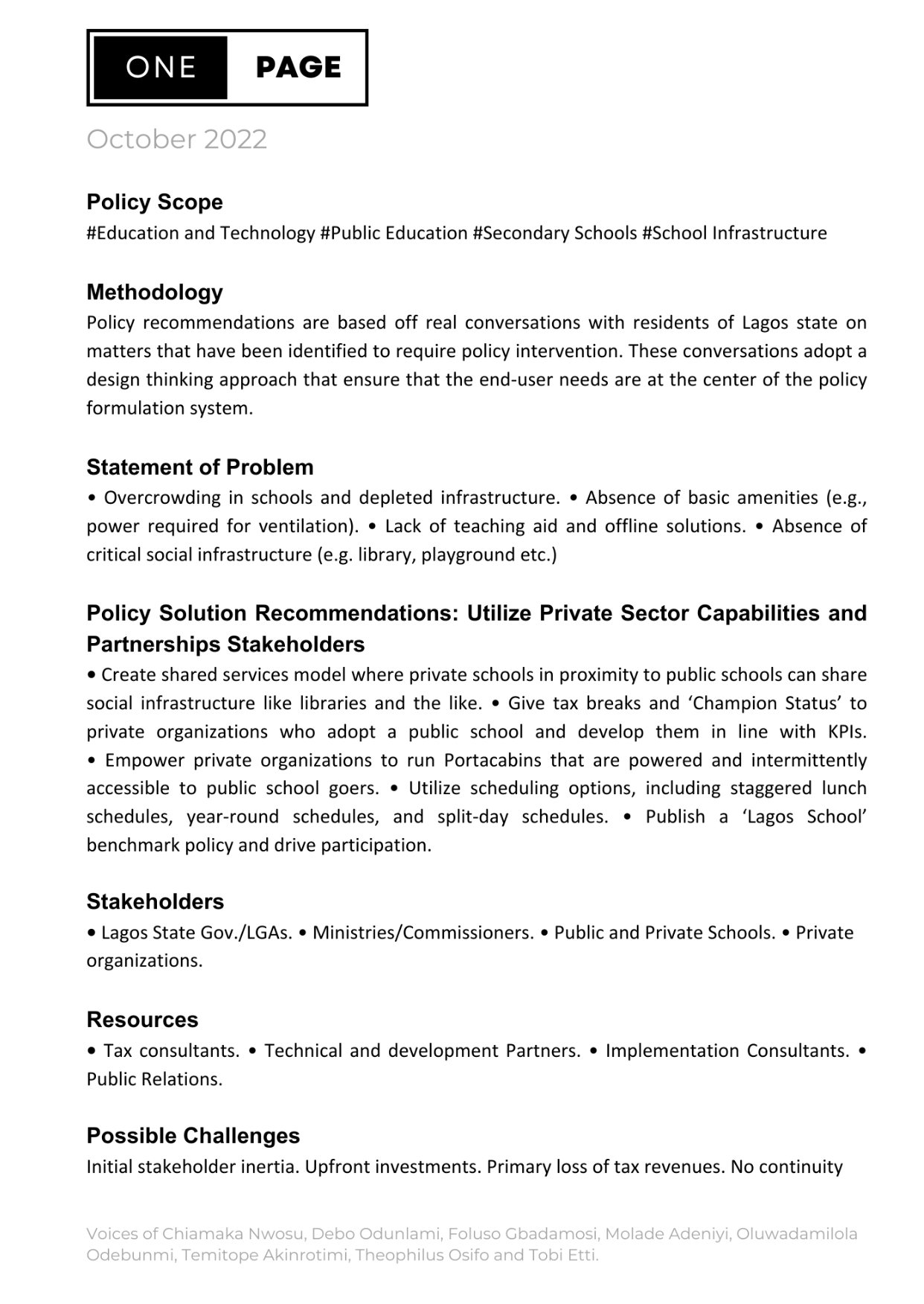
Open the full page in a new tab
About this brief
Lagos residents described public schools where classrooms are packed, buildings are run down and there is no power to keep rooms ventilated. This brief comes from those conversations, held using a design thinking approach that puts the people affected at the centre. It proposes how private-sector partners could help ease overcrowding in Lagos public schools.
What residents told us
Schools are overcrowded and buildings are run down
Basic amenities are missing, including power for ventilation
Teaching aids and offline learning tools are scarce
Libraries, playgrounds and other shared facilities are absent
What they propose
Let nearby private schools share facilities such as libraries with public schools
Give tax breaks and ‘Champion Status’ to companies that adopt a public school and develop it against clear targets
Let private organisations run powered Portacabins that public school pupils can use
Use staggered lunch breaks, year-round calendars and split-day schedules
Publish a ‘Lagos School’ benchmark policy and drive participation
Who needs to act
The Lagos State Government and local government areas, ministries and commissioners, public and private schools, and private organisations. The challenges include initial resistance from stakeholders, upfront investment, lost tax revenue in the short term and keeping reforms going over time.
Built from the voices of Chiamaka Nwosu, Debo Odunlami, Foluso Gbadamosi, Molade Adeniyi, Oluwadamilola Odebunmi, Temitope Akinrotimi, Theophilus Osifo and Tobi Etti.