
In 60 seconds
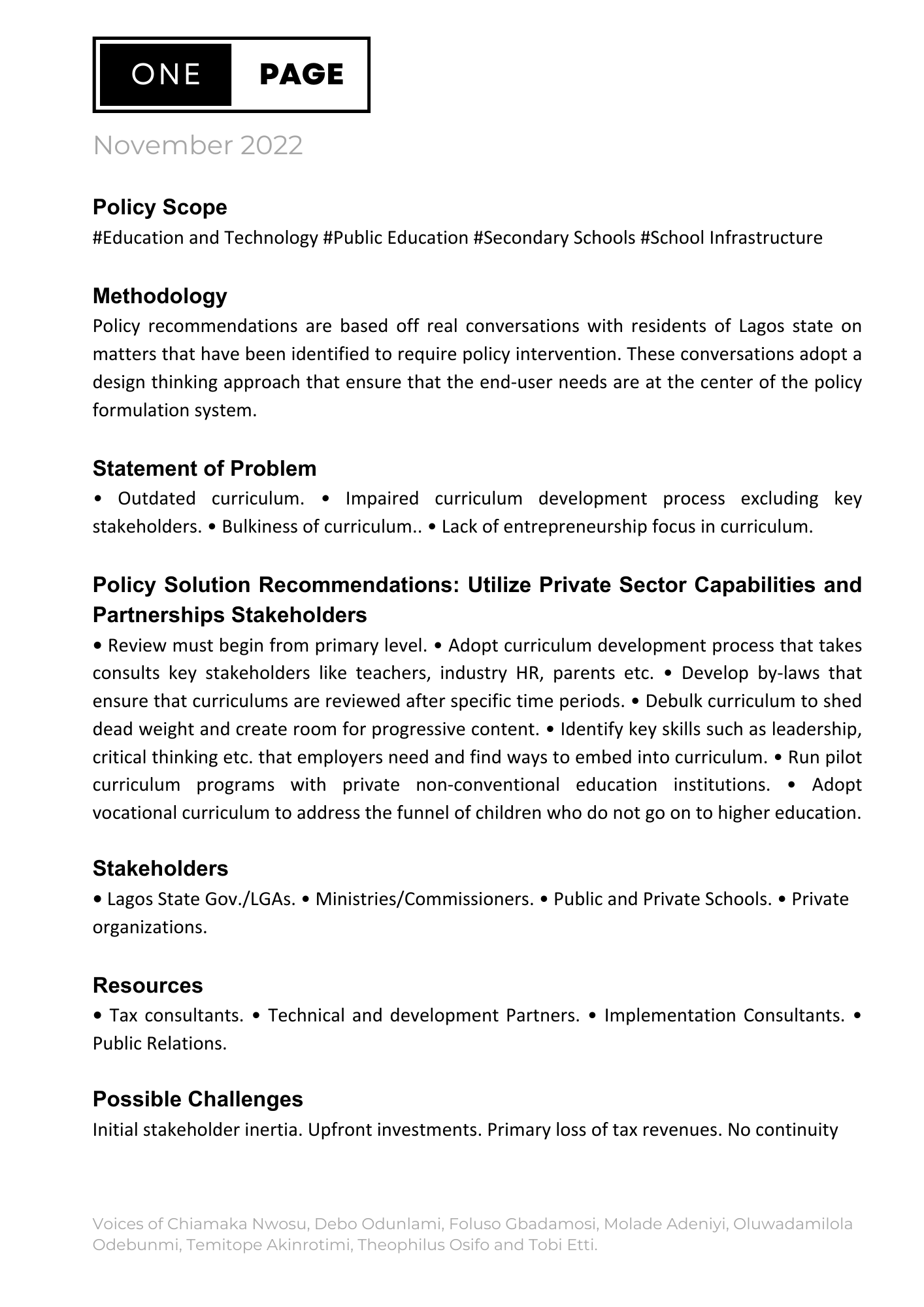
- Residents named an outdated, bulky curriculum, too little focus on entrepreneurship, and a process that leaves out key stakeholders.
- Proposals: start the review at primary level, involve teachers, employers and parents, and require reviews at set intervals by law.
- Build in the skills employers need, pilot programmes with private education providers, and offer vocational tracks for children who do not go on to higher education.
Open the full page in a new tab
About this brief
Lagos residents told us their children are learning from a curriculum that is outdated, overloaded and disconnected from the jobs they will need. This brief comes from those conversations, held using a design thinking approach that puts the people affected at the centre. It proposes how the Lagos State Government could rethink the school curriculum with private-sector partners.
What residents told us
The curriculum is outdated
It is too bulky
It lacks a focus on entrepreneurship
Teachers, employers and parents are left out of how it is developed
What they propose
Start the review at primary level
Consult teachers, employers and parents when developing the curriculum
Pass by-laws that require reviews at set intervals
Cut dead weight to make room for progressive content
Build in the skills employers need, such as leadership and critical thinking
Pilot new programmes with private, non-conventional education providers
Offer vocational tracks for children who do not go on to higher education
Who needs to act
The Lagos State Government and local government areas, ministries and commissioners, public and private schools, and private organisations. The challenges include initial resistance from stakeholders, upfront investment, lost tax revenue in the short term and keeping reforms going over time.
Built from the voices of Chiamaka Nwosu, Debo Odunlami, Foluso Gbadamosi, Molade Adeniyi, Oluwadamilola Odebunmi, Temitope Akinrotimi, Theophilus Osifo and Tobi Etti.