
In 60 seconds
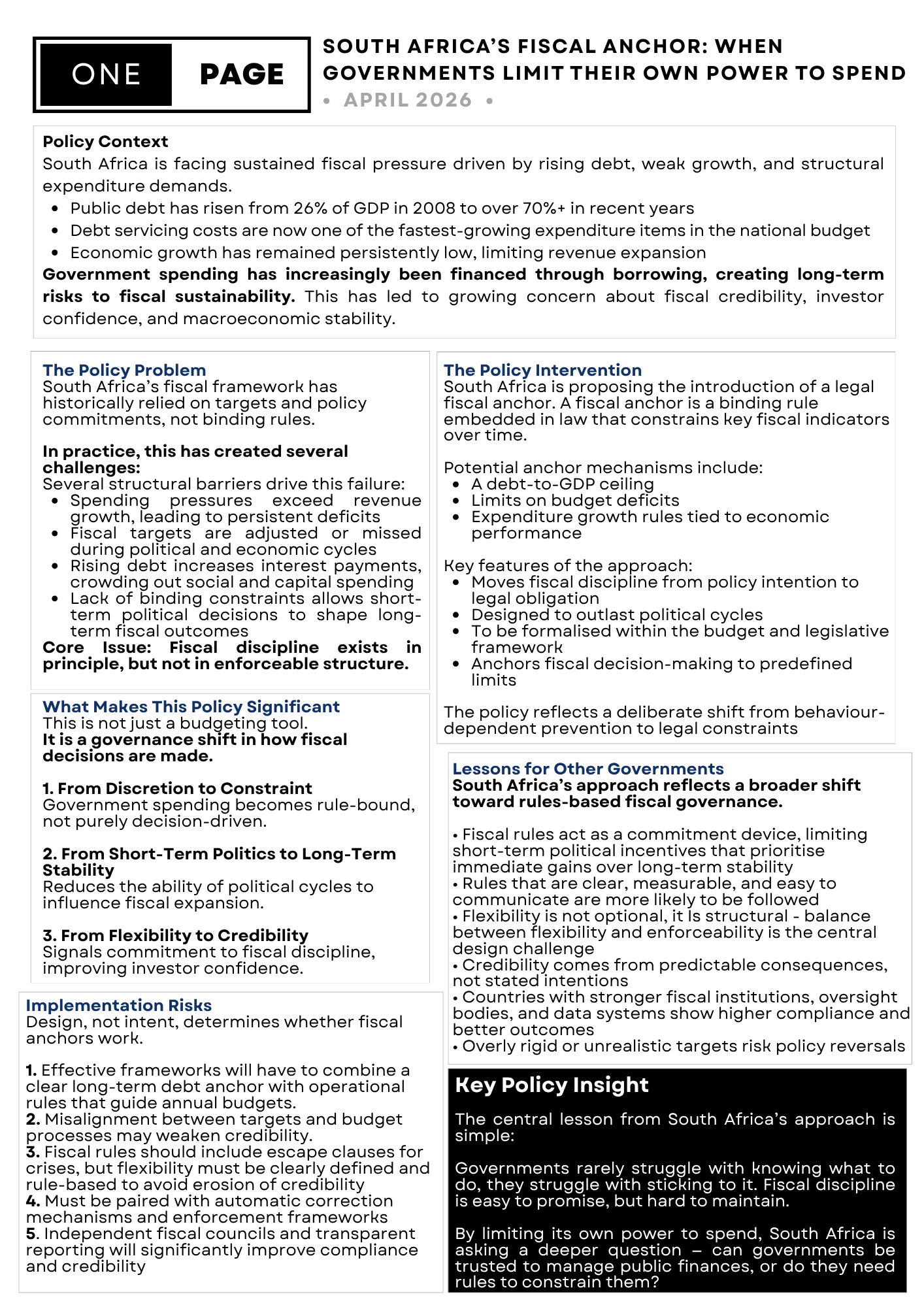
- Public debt has risen from 26% of GDP in 2008 to over 70%, and debt costs are now among the fastest-growing items in the national budget.
- South Africa is proposing a fiscal anchor: a binding rule in law, such as a debt-to-GDP ceiling or limits on budget deficits.
- It moves spending from discretion to constraint. It only works if the rules are credible, enforceable and flexible enough for real crises.
Open the full page in a new tab
About this brief
South Africa is considering a legal fiscal anchor: a rule written into law that limits how far public debt, deficits or spending can grow. This brief looks at why the government is proposing it, what it could change, and what would make it work.
The problem
Public debt has risen from 26% of GDP in 2008 to over 70% in recent years. Debt service is now one of the fastest-growing items in the national budget, and weak economic growth limits how far revenue can rise. South Africa's fiscal framework has relied on targets and commitments rather than binding rules, so targets have been adjusted or missed as political and economic cycles change.
What a fiscal anchor would do
Set a ceiling on public debt as a share of GDP
Limit budget deficits
Tie spending growth to economic performance
The shift is from discretion to constraint, from short-term politics to long-term stability, and from flexibility to credibility with investors and the public.
What makes fiscal rules work
Pair a long-term debt anchor with operational rules for each annual budget
Define escape clauses for crises clearly and in advance
Add automatic correction and enforcement mechanisms
Back compliance with an independent fiscal council and transparent reporting
Avoid targets so rigid that they invite reversal
Governments rarely struggle to know what to do. They struggle to stick to it. By limiting its own power to spend, South Africa is testing whether rules can do what promises have not.