
In 60 seconds
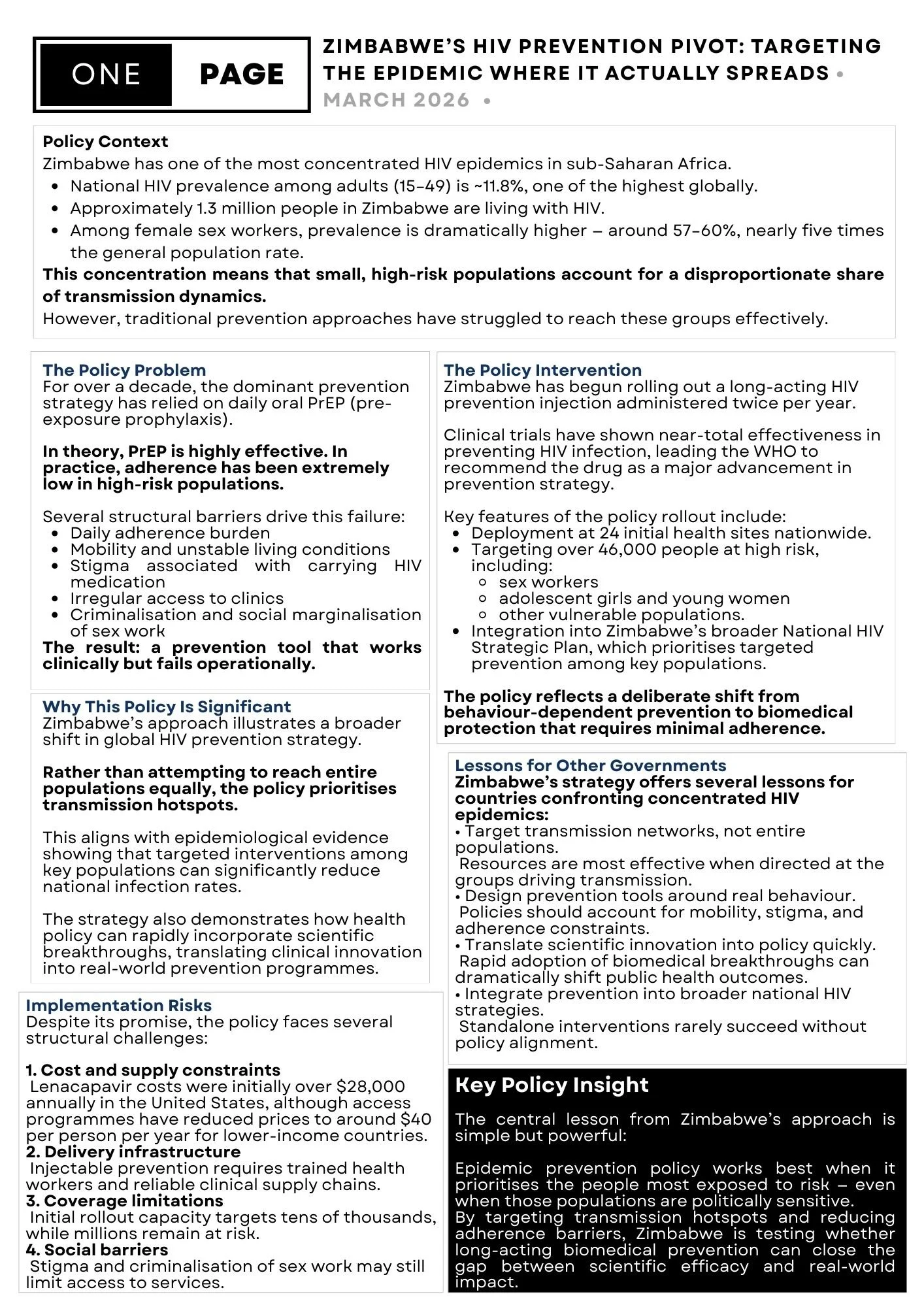
- About 1.3 million people in Zimbabwe live with HIV. Among female sex workers, prevalence is around 57–60%, nearly five times the general rate.
- Zimbabwe has begun rolling out a long-acting prevention injection given twice a year, at 24 sites, targeting over 46,000 people at high risk.
- It swaps daily pills that people struggle to keep taking for protection that needs little upkeep. Cost, supply and stigma are the risks to watch.
Open the full page in a new tab
About this brief
Zimbabwe has begun rolling out a long-acting HIV prevention injection, given twice a year, to the people most at risk. This brief explains why the government is targeting prevention where the epidemic actually spreads, and what could hold the rollout back.
The problem
Around 1.3 million people in Zimbabwe live with HIV, and adult prevalence is about 11.8%, one of the highest rates in the world. Among female sex workers it is around 57 to 60%, nearly five times the general rate. For over a decade, prevention relied on daily oral PrEP. It works clinically, but it is hard to take every day for people facing stigma, frequent moves, unstable housing and irregular access to clinics.
The policy
A twice-yearly injection that showed near-total effectiveness in clinical trials and is recommended by the WHO
An initial rollout at 24 health sites nationwide
Targets more than 46,000 people at high risk, including sex workers and adolescent girls and young women
Built into the National HIV Strategic Plan, which prioritises key populations
Lessons for other governments
Target transmission networks rather than whole populations equally
Design prevention around how people actually live
Move scientific breakthroughs into policy quickly
Tie new tools into national strategy, because standalone programmes rarely last
Risks to watch
Cost and supply: lenacapavir first cost over US$28,000 a year in the United States, though access programmes have brought it to around US$40 per person per year for lower-income countries. The rollout also needs trained health workers and reliable supply chains, it reaches tens of thousands while millions remain at risk, and stigma and the criminalisation of sex work may still keep people away.