
In 60 seconds
- Every year Nigeria imports fruit, oils, legumes, fish and more from other African countries, and each shipment carries a tariff.
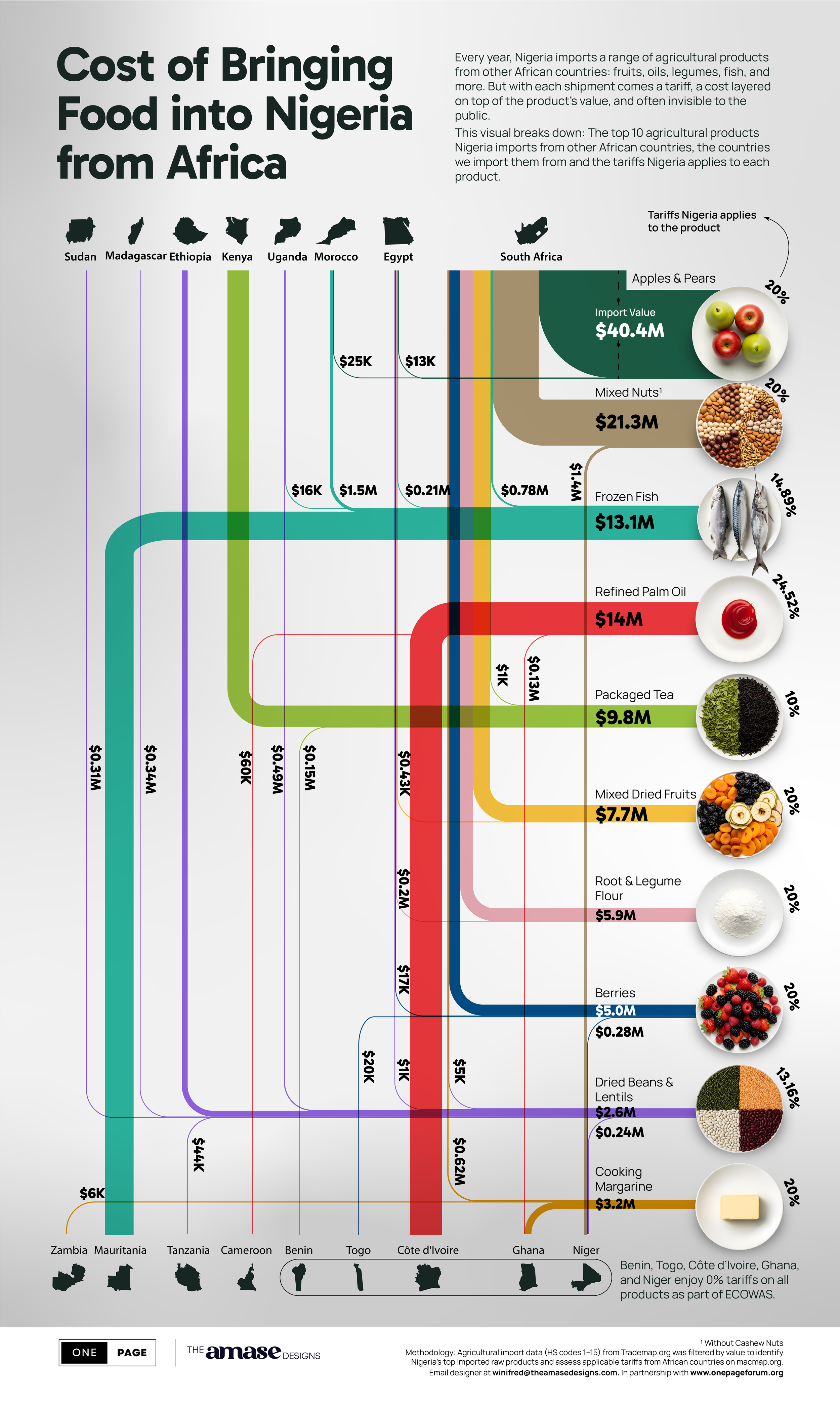
- Apples and pears are the biggest of the top 10 at $40.4M, followed by mixed nuts at $21.3M.
- Tariffs on these foods run from 10% on packaged tea to about 24.5% on refined palm oil: a cost added on top of the price, and often invisible to the public.
Open the full page in a new tab
About this visual
Every year Nigeria imports fruit, oils, legumes, fish and more from other African countries, and each shipment carries a tariff that most people never see. This data visual, designed with The Amase Designs, breaks down Nigeria's top 10 agricultural imports from Africa, where they come from and the tariff Nigeria applies to each.
Nigeria's top 10 agricultural imports from Africa
Apples and pears: US$40.4m, 20% tariff
Mixed nuts, excluding cashews: US$21.3m, 20%
Refined palm oil: US$14m, 24.52%
Frozen fish: US$13.1m, 14.89%
Packaged tea: US$9.8m, 10%
Mixed dried fruits: US$7.7m, 20%
Root and legume flour: US$5.9m, 20%
Berries: US$5.0m, 20%
Cooking margarine: US$3.2m, 20%
Dried beans and lentils: US$2.6m, 13.16%
Where the food comes from
Source countries include South Africa, Egypt, Morocco, Uganda, Kenya, Ethiopia, Madagascar, Sudan, Zambia, Mauritania, Tanzania and Cameroon. Imports from Nigeria's ECOWAS neighbours, Benin, Togo, Côte d'Ivoire, Ghana and Niger, enter at a 0% tariff.
Method
Import values come from Trademap.org (HS codes 1 to 15), filtered by value to find Nigeria's top imported raw agricultural products. Tariffs come from macmap.org.