
In 60 seconds
- Learning, safety and wellbeing failures feed each other. Girls are enrolled in school, but many cannot read at the level they need.
- Fear, insecurity and poverty shape attendance and dropout. The brief calls for safe school corridors and community-based safe hubs.
- 94% of participants gained a new understanding of self-leadership. With even minimal support, girls’ confidence shifts fast.
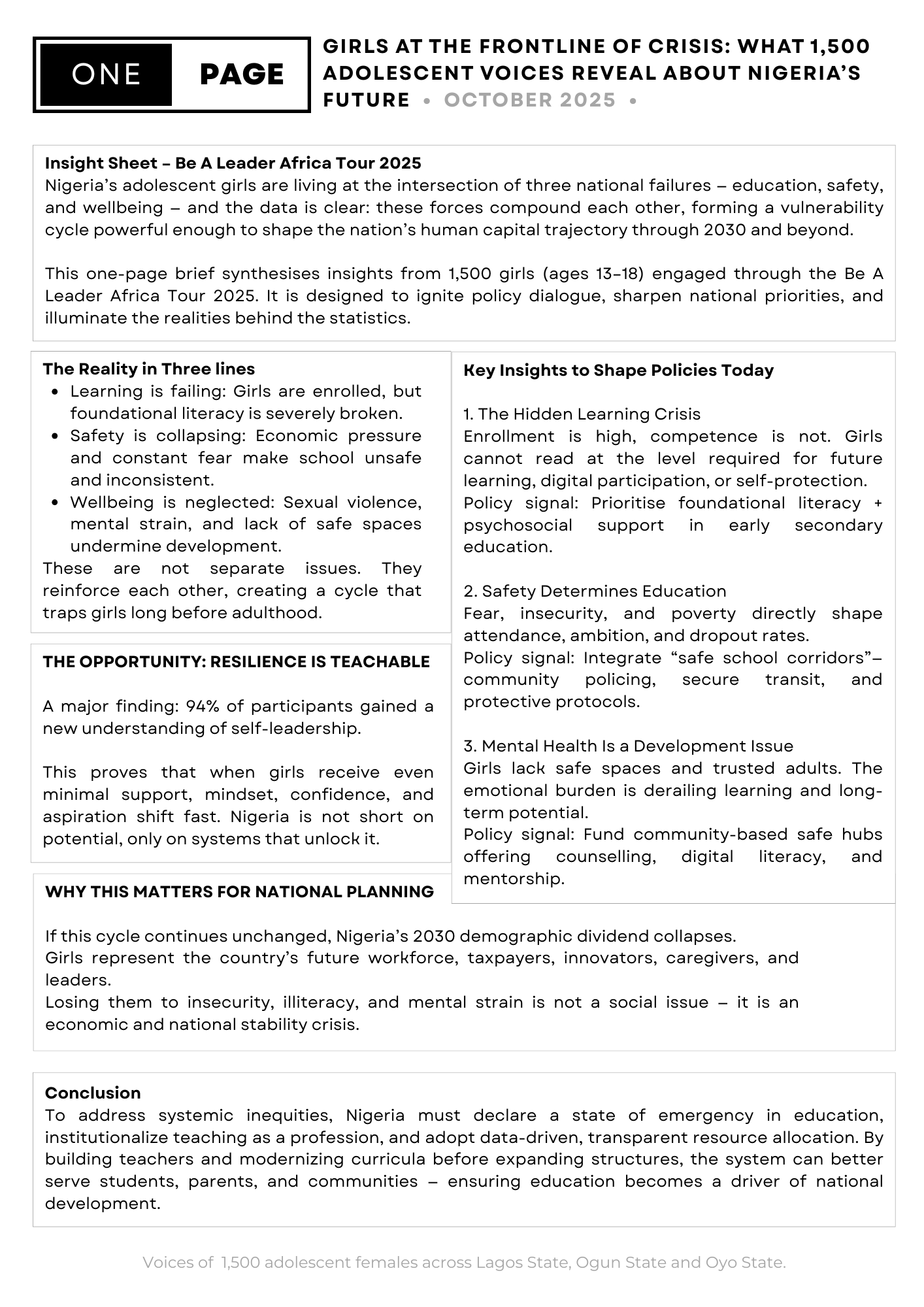
Open the full page in a new tab
About this brief
This brief brings together what 1,500 adolescent girls aged 13 to 18 in Lagos, Ogun and Oyo states shared through the Be A Leader Africa Tour 2025. It shows how failures in learning, safety and wellbeing feed each other, and what policy can do about it.
What the girls told us
Learning is failing: girls are enrolled in school, but foundational literacy is badly broken
Safety is collapsing: economic pressure and constant fear make school unsafe and attendance inconsistent
Wellbeing is neglected: sexual violence, mental strain and a lack of safe spaces hold girls back
These are not separate problems. They reinforce each other and trap girls in a cycle long before adulthood.
What policy can do
Prioritise foundational literacy and psychosocial support in early secondary school
Create safe school corridors through community policing, secure transport and protective protocols
Fund community-based safe hubs that offer counselling, digital literacy and mentorship
Why it matters
Resilience can be taught: 94% of participants gained a new understanding of self-leadership, and even minimal support quickly shifts girls' confidence and ambition. Girls are Nigeria's future workforce, taxpayers, innovators, caregivers and leaders. Losing them to insecurity, illiteracy and mental strain is an economic and national stability crisis, not only a social one.