
In 60 seconds
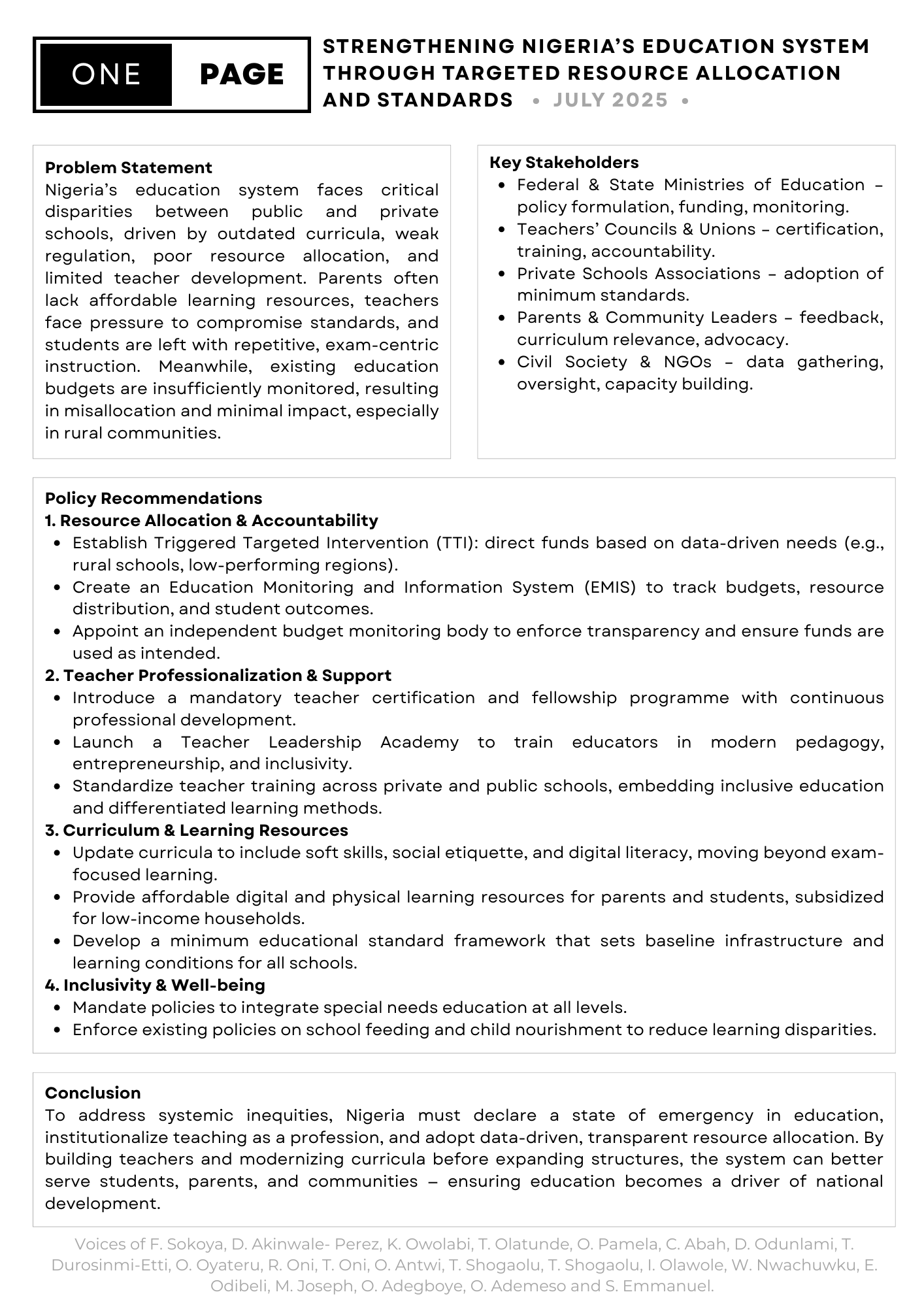
- The gap between public and private schools comes from outdated curricula, weak regulation, poor resource allocation and limited teacher development.
- It recommends needs-based funding for rural and low-performing schools, a system to track budgets and outcomes, and an independent budget monitor.
- It calls for mandatory teacher certification, curricula with digital literacy and soft skills, and policies for special needs and school feeding.
Open the full page in a new tab
About this brief
Parents, teachers and community members told us where Nigeria's education system is failing them. This brief, built from the voices of 21 contributors, sets out how targeted resource allocation and clear standards could close the gap between public and private schools.
The problem
Outdated curricula, weak regulation, poor resource allocation and limited teacher development hold public schools back. Parents struggle to afford learning resources, teachers face pressure to lower standards, and students get repetitive, exam-focused teaching. Education budgets are poorly monitored, so money is misallocated and has little impact, especially in rural communities.
What they propose
Direct funding to rural and low-performing schools through a data-driven Triggered Targeted Intervention
Build an Education Monitoring and Information System to track budgets, resources and student outcomes
Appoint an independent body to monitor education spending
Introduce mandatory teacher certification, continuous training and a Teacher Leadership Academy
Update curricula to include soft skills and digital literacy, beyond exam preparation
Subsidise learning resources for low-income families
Set minimum standards for every school, include children with special needs, and enforce school feeding
Who needs to act
Federal and state ministries of education, teachers' councils and unions, private schools' associations, parents and community leaders, and civil society groups. The contributors call for a state of emergency in education and for teaching to be treated as a profession.